



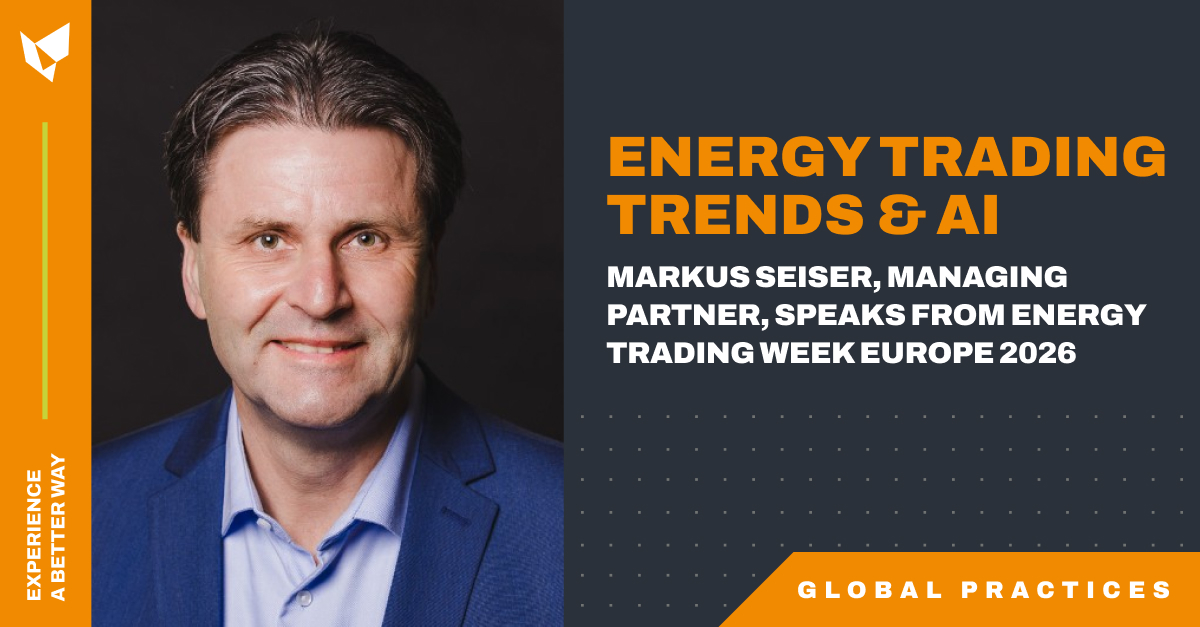
At Energy Trading Week Europe 2026, where capSpire was lead sponsor, Managing Partner, Global Practices, Marcus Seiser discussed what this year has meant for energy and commodity trading, what clients ask about AI, and three predictions for the year ahead.
Watch the full interview below
7-minute interview
Video duration: Approximately 6 minutes 37 seconds
In this video, Marcus Seiser discusses:
- 0:00 – Introduction
- 0:24 – Why Energy Trading Week matters
- 1:07 – capSpire’s growth
- 2:22 – Volatility and new market standards
- 3:50 – What clients ask about AI
- 4:58 – Predictions for new year
FAQs
Why does Energy Trading Week matter to capSpire?
The event brings the European energy trading community together in one place: traders, risk managers, technology specialists and regulators. capSpire has supported the event for many years and was lead sponsor in 2026. It is an opportunity to meet clients, partners and new market entrants, and to understand the trends shaping the market.
What has changed in energy trading this year?
Price volatility has led firms to reassess market and credit risk, and recent events have made companies review their supply chains. Risks that many considered unlikely have materialized.
Which trends are now standard practice?
Real-time trading, guarantees of origin, battery power and power purchase agreements (PPAs). The industry discussed these topics for years, and they are now part of normal operations.
Why is AI becoming essential for energy traders?
These new practices produce large volumes of data. Firms need new ways to manage that data and extract value from it, and AI is the tool for this.
What do energy trading firms ask about AI?
It depends on their maturity. Some want market intelligence and benchmarking against peers. Others are improving their data quality, because AI is only as effective as the data behind it. The most experienced firms want to move beyond automating operational tasks towards decision support for traders.
How does energy trading compare with financial markets?
Energy and commodity trading has long been considered more than ten years behind financial trading. That difference is now reducing quickly, and the pace of change is expected to continue or increase.
What are the predictions for next year?
The way battery storage is priced and its risk is managed will continue to evolve. AI will move from back-office prototypes into daily operations and decision-making. And regulation of AI will begin to emerge.
Why will AI in trading need regulation?
For traceability. If an auditor asks why a decision was made, “AI made the decision” is not an acceptable answer. Firms will need to show what AI decided and why.
Are these topics relevant to your organization?
Whether you are reviewing your approach to risk, preparing your data for AI or aligning your trading systems with new asset classes, we would like to hear from you.